
Warrenton: A 250-Year Legacy of Prevention
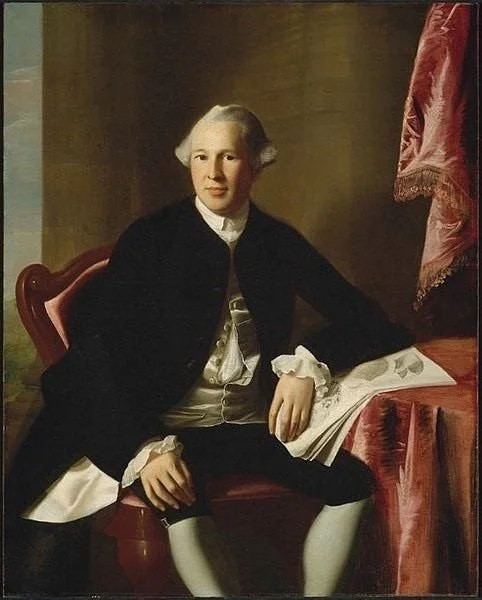
Dr. Joseph Warren (c. 1765) by John Singleton Copley. Courtesy of the Museum of Fine Arts, Boston / Public Domain.
Author’s Note
I am not a historian. Most of my writing has focused on public health, cancer prevention and the history that helps us understand both.
Warrenton knows and values its history, so I offer this with respect for those who have studied and preserved it and with gratitude for a discovery that gave me an even greater appreciation for the place Less Cancer calls home.
One lesson from more than 20 years in public health has become very clear to me:
Health is local. But the classroom has no walls.
Before Warrenton, there was Warren Academy
Before Warrenton was incorporated as a town, there was Warren Academy on what became known as Academy Hill.
In 1788, the Virginia General Assembly formally incorporated the trustees of Warren Academy in Fauquier County. The legislation also referenced land previously conveyed by Richard Henry Lee to earlier trustees of the academy.
The community was then known as Fauquier Court House. When it was incorporated in 1810, it became Warrenton. The Virginia Department of Historic Resources confirms that the town takes its present name from Warren Academy.
Warrenton’s local history identifies the academy as having been named for General Joseph Warren, a New England physician and casualty of the Battle of Bunker Hill.
Warren wasn’t from Warrenton. He wasn’t even from Virginia.
He was born in Roxbury, Massachusetts, in 1741, attended Harvard and became a physician in Boston. He later became an important leader in the American Revolution and was killed at Bunker Hill in 1775.
But before the battlefield, there was medicine.
And prevention.
Before America, there was prevention
During Boston’s devastating smallpox epidemic of 1764, the 22-year-old Warren remained in the city, caring for people who were sick and dying. He operated a smallpox inoculation clinic on Castle Island in Boston Harbor.
Among those inoculated under Warren and Dr. Nathaniel Perkins was John Adams, the future president. Adams recorded the experience himself in his autobiography.
This was 12 years before the Declaration of Independence.
Inoculation was controversial. People feared it. People distrusted it. People argued about it.
Yet evidence was already demonstrating its potential. During Boston’s earlier 1721 epidemic, the estimated fatality rate among people who contracted smallpox naturally was about 14 percent, compared with about 2 percent among those who had been inoculated.
Warren went on to inoculate many Bostonians. During the 1764 epidemic, he also treated poor patients without charge, and his surviving medical account book documents his treatment of enslaved patients.
Disease did not respect wealth or circumstance then.
It doesn’t now.
Prevention has to reach people.
From Warren to Warrenton
There is something about this history that resonates with me personally.
Joseph Warren wasn’t local.
Neither was I.
Yet Warren’s life and reputation traveled far beyond Massachusetts. A small Virginia community chose his name for an academy. Eventually, the town carried the academy’s name.
More than two centuries later, Less Cancer found its home here.
Less Cancer was founded in Fauquier County, Virginia, in 2003, and made its home in Warrenton, the county seat. In 2004, we received our IRS determination letter recognizing Less Cancer as tax-exempt under Section 501(c)(3).
At first, our work was very local.
This was before the wildfire of social media and before educational programming created in a small community could so easily reach people across the country.
Technology changed what local could mean.
Today, physicians, scientists and public-health professionals can speak to a live audience while the resulting education reaches people far beyond the room. The questions from those audiences help us understand what people know, what they don’t know and what they need to know.
The classroom has no walls.
But that has never made local less important.
Health is local
Food insecurity is local.
Clean water is local.
Environmental exposures are local.
Access to health care is local.
Whether someone understands a vaccine, receives preventive care or can find trustworthy health information ultimately becomes very personal and very local.
That is why I am particularly proud that Less Cancer’s work is useful here at home in Warrenton while also reaching communities across the country.
Investment in Less Cancer in Warrenton doesn’t stay within Warrenton—but it starts here.
Local support helps create public-health education, programming and partnerships that serve people here at home. Technology allows that same work to travel.
A community does not have to choose between supporting something local and supporting something with national reach.
It can do both.
Local support doesn’t limit the reach. It makes the reach possible.
Prevention and America’s 250th
Smallpox prevention also became part of America’s founding story.
During the Revolutionary War, smallpox posed a serious threat to the Continental Army. In 1777, George Washington ordered troops inoculated. The National Park Service reports that inoculation substantially reduced the prevalence of smallpox and the likelihood of large outbreaks among Continental forces.
As America approached its 250th anniversary, that history took on new meaning for me.
I initiated the idea and public-health framework for an America 250 health resolution, and Less Cancer worked with Congresswoman Debbie Dingell’s office as the proposal moved toward introduction.
On July 2, 2026, Rep. Dingell introduced the resolution recognizing America’s 250th anniversary while reaffirming the importance of prevention, public health and access to health care.
The resolution recalls Washington’s decision to inoculate the Continental Army and calls attention to preventive care, screenings, health education, clean air, clean water and healthy communities.
For me, the connection is remarkable.
Before America existed, Joseph Warren was practicing prevention.
During the Revolution, Washington used prevention to protect an army.
And 250 years later, an organization headquartered in the Virginia town whose name ultimately honors Warren helped bring prevention into a congressional resolution commemorating America’s 250th anniversary.
That isn’t a claim of lineage.
It is a history worth carrying forward.
From Warrenton to public policy
Less Cancer’s work from Warrenton does not stop with education.
For more than two decades, we have worked to connect community, science, medicine and public policy around cancer prevention and public health.
Our National Cancer Prevention Workshop brings leaders in medicine, science, public health and policy together, while technology makes that programming available far beyond the people physically in the room.
Less Cancer initiated the bipartisan Congressional Cancer Prevention Caucus and continues to work collaboratively with its members to keep cancer prevention part of the federal policy conversation.
Our approach is straightforward:
Listen locally.
Educate broadly.
Connect the science.
Bring what we learn to policy.
Because national policy eventually lands somewhere local—in somebody’s home, somebody’s doctor’s office and somebody’s community.
Apparently, fundraising hasn’t changed much
There is one final piece of Warren Academy history that made me smile.
Apparently, Warren Academy faced a problem familiar to anyone running an educational nonprofit:
They needed money.
In 1789, the Virginia General Assembly authorized its trustees to raise up to £500 by lottery for the academy.
So even in eighteenth-century Warrenton, people doing educational work had to figure out how to pay for it.
Some things really do survive 250 years.
Proudly from Warrenton
I’m proud that Less Cancer calls Warrenton home.
I’m proud of our partners and the community that has supported this work.
I’m proud that information created here can help people here—and then travel to communities across the country.
And I’m proud that our town’s name carries the memory of a physician who confronted one of the great public-health challenges of his time.
Warren wasn’t local.
Neither was I.
But ideas don’t need a ZIP code.
Health is local.
Education can travel.
Prevention has no town line.
The classroom has no walls.
Sources & Further Reading
Virginia Department of Historic Resources — Warrenton Historic District
Official Commonwealth documentation on Warrenton, Fauquier Court House and Warren Academy.
https://www.dhr.virginia.gov/historic-registers/156-0019/
National Register of Historic Places — Warrenton Historic District, 1983 Nomination
Historical documentation of Warren Academy and Academy Hill.
National Register of Historic Places — Warrenton Historic District, 2024 Update
Updated historical documentation of the Warrenton Historic District.
Experience Warrenton — Our Story
Local history identifying Warren Academy as the source of Warrenton’s name and General Joseph Warren as the academy’s namesake.
https://www.experiencewarrentonva.com/our-story/
Virginia Statute — 1788 Incorporation of Warren Academy
The Virginia law formally incorporating the trustees of Warren Academy in Fauquier County.
https://usgenwebsites.org/vagenweb/hening/vol12-29.htm
Virginia Statute — 1789 Warren Academy Legislation and Lottery Authorization
Legislation concerning the academy’s trustees and authorizing up to £500 to be raised by lottery.
https://usgenwebsites.org/vagenweb/hening/vol13-05.htm
National Park Service — Dr. Joseph Warren
Warren’s Massachusetts origins, medical career and work during Boston’s 1764 smallpox epidemic.
https://www.nps.gov/people/dr-joseph-warren.htm
National Park Service — Smallpox, Inoculation and the Revolutionary War
Colonial smallpox inoculation, Warren’s work and George Washington’s Continental Army inoculation program.
https://www.nps.gov/articles/000/smallpox-inoculation-revolutionary-war.htm
Massachusetts Historical Society — John Adams Autobiography
Adams’s own account of his 1764 inoculation under the direction of Dr. Nathaniel Perkins and Dr. Joseph Warren.
https://www.masshist.org/digitaladams/archive/doc?archive=autobiography&id=A1_9
National Park Service — Joseph Warren: The Sacrifice that Rallied a Nation
Additional history of Warren’s medical practice and service to poor patients.
https://www.nps.gov/articles/000/joseph-warren-the-sacrifice-that-rallied-a-nation.htm
Massachusetts Medical Society — Black Americans and Health Care in 18th-Century Massachusetts
Discussion of Warren’s surviving medical account book and its documentation of enslaved patients.
Less Cancer — America 250 Health Resolution
Background on the July 2, 2026 resolution connecting America’s 250th anniversary with prevention, public health, access to health care and healthier communities.
https://www.lesscancer.org/blog/dingell-leads-resolution-honoring-250th-anniversary
Less Cancer — National Cancer Prevention Workshop
Background on Less Cancer’s national cancer-prevention education and programming.
https://www.lesscancer.org/national-cancer-prevention-workshop
Less Cancer — Congressional Cancer Prevention Caucus
Background on the bipartisan Congressional Cancer Prevention Caucus and Less Cancer’s role in initiating and working with the caucus.
https://www.lesscancer.org/united-states-cancer-prevention-caucus
Less Cancer — About Us
Background on Less Cancer’s prevention, education and public-health mission.